What is a fan activation loop?
Last updated August 23, 2026
The short answer
A fan activation loop runs four beats: identify, act, measure, improve. Identify who each fan actually is, act on that, measure what those specific fans did, and improve the next turn from what you learned. Then it goes round again.
Most artists run the first two and stop. That is an open activation loop, and it is why campaign number six is no better than campaign number one.
Most artists run a straight line, not a loop
Ask an artist what they learned from their last campaign and the honest answer is usually "it went okay" or "that one was slow."
Which is not nothing. It is just not something you can do anything with. You cannot repeat the good parts, because you do not know which parts were the good parts.
That is the whole problem in one sentence. Effort goes out, and nothing comes back that changes what happens next time. The campaign after it starts from exactly where the last one started, with exactly as much information.
An activation loop runs four beats
Vida's Fan Activation Loop is not complicated. It is just longer than the version most people run.
1. Identify
Work out who each fan actually is. Not a list of addresses: who is listening now, who arrived last week, who has quietly stopped. Different people, different situations, different messages.
Most artists cannot do this, and it is not their fault. A contact list records that someone once typed in an address; it does not record behavior. More on that in every fan is not the same fan.
2. Act
Reach the fans a message is actually for, at a moment that fits them, with something worth their while.
The default is one message to everyone whenever there is news. The alternative is not "send more messages." It is that fewer people get each message and more of them care about it. What makes it fire matters as much as what it says, which is a whole question of its own.
3. Measure
Here is where nearly every activation loop breaks open, and it is not because people skip it. It is because the version of measuring that is available is the wrong one.
Opens and clicks are activity. Streams going up that week is activity. Neither tells you whether the fans you reached did anything they would not have done anyway. That needs a comparison: what the people you contacted did, against what a randomly chosen group you deliberately skipped did.
That is the beat that closes the circle, and it is the subject of did your fan marketing actually work.
4. Improve
The point of measuring is this beat. If you learn that the fans who had gone quiet responded to one kind of message and ignored another, that is not a fact about last month. It is an instruction for next month.
Then it goes round again, knowing something it did not know before. A fanbase is never finished, so neither is this, and that is the whole reason it is drawn as a circle rather than a checklist.
This is the only reason any of it compounds. Skip this beat and you are not running a loop, you are running the same campaign repeatedly and hoping the material carries it.
Do not trust anyone selling you a loop without the measuring
This matters more than the diagram, so it gets its own section.
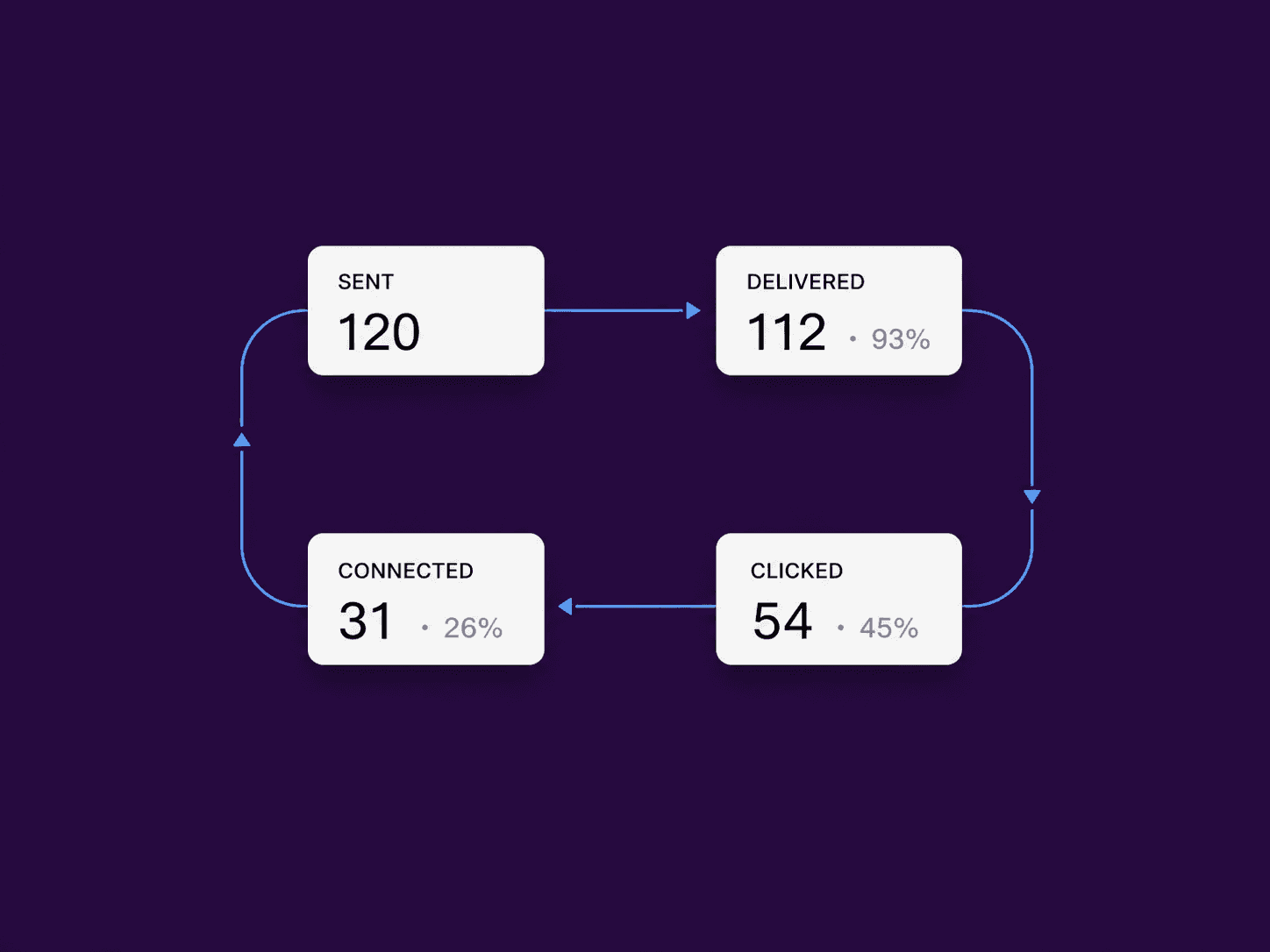
"Loop" is a fashionable word. Growth loops, flywheels, automation loops. Plenty of tools will sell you a loop that means: if a fan does X, automatically send them Y. Rules firing on triggers.
That is a workflow, not a loop. It executes what you already believed. Nothing about it ever tells you whether the rule you wrote was any good, so it repeats your assumptions faster rather than replacing them with knowledge.
The difference is measurement, and it is the only difference that matters:
| A rules-based loop | A closed activation loop |
|---|---|
| Fires when a condition is met | Fires when a condition is met |
| Reports what it sent | Reports what each fan did next |
| No comparison group | A randomly held-back group to compare against |
| Repeats your assumptions | Corrects them |
| Turn ten looks like turn one | Turn ten is better than turn one |
If an activation loop cannot tell you which fans acted and what a comparable group of untouched fans did, it cannot improve. It can only go faster.
Loops and funnels are different tools
If you have read marketing advice before you have met the funnel. Strangers at the top, superfans at the bottom, everybody travelling downward.
Funnels are good for one thing: describing a stranger becoming a listener. They are bad at everything afterwards, because they run one direction and they end. Real fans do not reach the bottom and stop. They get more into you, then less, then more again when something lands. They vanish for eight months and come back for a tour.
A shape with an exit at the bottom cannot describe that, and a fanbase is mostly made of people who are already inside it. A loop can, because a loop's entire premise is that you go round again with what you learned.
Try this on Monday
You can close an activation loop on your next campaign with a spreadsheet, for free.
-
Write down what you expect, before you send anything. One sentence: "I think about 30% of the people I message will listen this week." A prediction written down beforehand is the difference between measuring and rationalising afterwards.
-
Leave a random tenth of them out. Random, not the least interested tenth. In a spreadsheet, add a column with
=RAND(), sort by it, take the bottom 10%. Those people get nothing. -
Send to the rest. Change nothing else.
-
Wait a full week, then compare the two groups. Did the people you contacted behave differently from the people you skipped? That gap, and only that gap, is what your campaign did.
-
Write one line about what happened and keep it where you will see it before the next campaign. Four of these is a record of what works on your fans specifically, which is worth more than any general advice, this page included.
Repeating it is where it breaks
Everything above works for one campaign. The place it breaks is repetition.
Running the comparison by hand for a few hundred contacts is an evening with a spreadsheet. Running it every time, for thousands of fans, while also noticing which individual people went quiet in the meantime, is a permanent job. In most artist teams it is nobody's job, which is why it tends to happen once, enthusiastically, and then never again.
The artists who get this right are usually the ones with somebody on staff whose job it is. That is the real reason it stays rare, and it has nothing to do with the idea being complicated.
Common questions
- What is a fan activation loop?
- A fan activation loop is the cycle an artist runs with their fanbase: identify who each fan is, act on that, measure what those specific fans did, and improve the next turn from what you learned. It runs four beats, and it is a loop rather than a line because the last one feeds the first.
- What does it mean to close an activation loop?
- Closing an activation loop means measuring what each individual fan did after you reached out, and feeding that back into the next turn. An open activation loop stops at sending. You know the message went out, but not who it moved, so nothing you learn carries forward.
- Why do most music campaigns stop at sending?
- Because measuring per fan is hard. Most tools can tell you a message was delivered and a link was clicked, but not whether that particular fan then listened. Without that you can count activity, but you cannot tell which part of what you did actually worked, so the activation loop never closes.